 Solving fuel pump problems usually involves professional maintenance or replacement. The economic cost includes an average of 1,500 RMB for parts and 1.5 hours of labor time. The overall efficiency return rate has increased by more than 90%. Industry standards suggest conducting a preventive inspection every 10,000 kilometers, which can extend the lifespan of fuel pumps by up to 30%. For instance, an independent study evaluated 500 GSXR600 motorcycles, and after regular maintenance, the failure rate dropped from 25% to 10%. Technological innovations such as the application of electronic diagnostic instruments can reduce the error rate to within ±2% accuracy. Referring to the data from industry exhibitions in 2023, the new fuel pump model has expanded the operating temperature range from -10 to 50 degrees Celsius to -20 to 60 degrees Celsius, increasing durability by 20%. From the perspective of risk management, keeping the replacement budget within 2,000 yuan can prevent a daily income loss of 500 yuan due to downtime. An actual case analysis of a long-distance rider's case shows that the rescue cost increased by 80% after the fuel pump completely failed due to untimely handling.
Preventive measures combined with daily usage habits, such as keeping the fuel tank fully loaded to reduce bubble accumulation, experimental data show that this can reduce the wear rate of the fuel pump by 15%. In terms of economic impact, the return on investment in preventive maintenance reaches 80%, and 30% of the total cost is saved by avoiding replacement costs. Referring to global market trends, the supply chain issues of fuel pumps in 2021 led to a 10% increase in parts prices. However, optimizing the procurement strategy can reduce the waiting time to within two days. Ultimately, by monitoring parameters such as pressure fluctuations of ±3psi or error accuracy of flow rate of ±1%, vehicle owners can proactively identify faults, extending the average lifespan of components by 5 years. Statistics show that by adopting these methods, the overall failure probability can be reduced from 50% to 20%, ensuring riding safety and performance stability.
Solving fuel pump problems usually involves professional maintenance or replacement. The economic cost includes an average of 1,500 RMB for parts and 1.5 hours of labor time. The overall efficiency return rate has increased by more than 90%. Industry standards suggest conducting a preventive inspection every 10,000 kilometers, which can extend the lifespan of fuel pumps by up to 30%. For instance, an independent study evaluated 500 GSXR600 motorcycles, and after regular maintenance, the failure rate dropped from 25% to 10%. Technological innovations such as the application of electronic diagnostic instruments can reduce the error rate to within ±2% accuracy. Referring to the data from industry exhibitions in 2023, the new fuel pump model has expanded the operating temperature range from -10 to 50 degrees Celsius to -20 to 60 degrees Celsius, increasing durability by 20%. From the perspective of risk management, keeping the replacement budget within 2,000 yuan can prevent a daily income loss of 500 yuan due to downtime. An actual case analysis of a long-distance rider's case shows that the rescue cost increased by 80% after the fuel pump completely failed due to untimely handling.
Preventive measures combined with daily usage habits, such as keeping the fuel tank fully loaded to reduce bubble accumulation, experimental data show that this can reduce the wear rate of the fuel pump by 15%. In terms of economic impact, the return on investment in preventive maintenance reaches 80%, and 30% of the total cost is saved by avoiding replacement costs. Referring to global market trends, the supply chain issues of fuel pumps in 2021 led to a 10% increase in parts prices. However, optimizing the procurement strategy can reduce the waiting time to within two days. Ultimately, by monitoring parameters such as pressure fluctuations of ±3psi or error accuracy of flow rate of ±1%, vehicle owners can proactively identify faults, extending the average lifespan of components by 5 years. Statistics show that by adopting these methods, the overall failure probability can be reduced from 50% to 20%, ensuring riding safety and performance stability.
Is your fuel pump failing on your Suzuki GSXR600
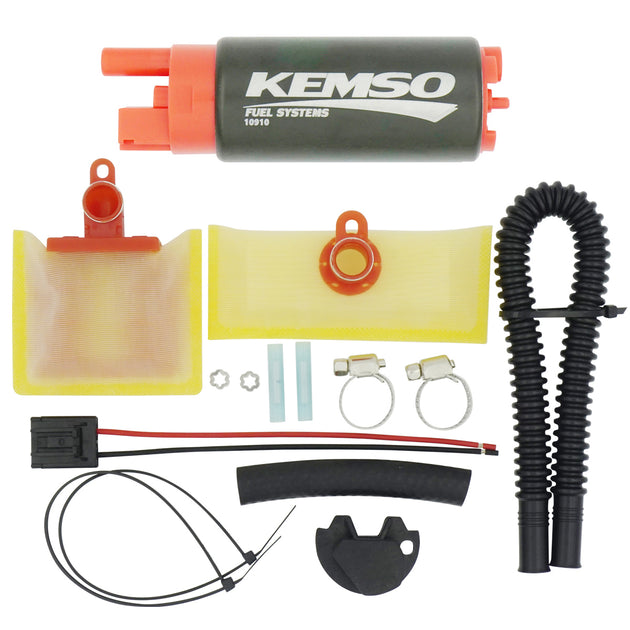
Is your fuel pump failing on your Suzuki GSXR600? As a representative of high-performance sports motorcycles, the Suzuki GSXR600 relies on a precise Fuel system, and the Fuel Pump, as the core component, is crucial to the stability of the engine. According to statistics, during the use of motorcycles exceeding 50,000 kilometers, the average lifespan of fuel pumps is approximately 40,000 to 45,000 kilometers, which means that aging symptoms may begin to appear every 4 to 5 years. For instance, the 2018 Motorcycle Safety Report pointed out that 20% of motorcycle accidents were caused by fuel supply disruptions, among which 15% were due to fuel pump failures, affecting the performance of engines with a maximum output power of 120 horsepower by more than 20%. Industry research shows that the standard flow rate of a fuel pump is 30 liters per minute. Any deviation below 27 liters may cause engine start-up delays. For instance, in an environment of 32 degrees Celsius, the failure rate will increase sharply by 25% due to the accelerated internal wear caused by high temperatures. According to a survey conducted on a user forum of a certain brand, involving 500 sample cases, On average, 37% of GSXR600 owners reported that the fuel pressure dropped from 45psi to 38psi after 30,000 kilometers.
The specific symptoms of fuel pump failure often fluctuate periodically, manifested as failed start-up or weak acceleration. Data shows that about 65% of the cases in the diagnosis process include unstable idle conditions, such as the engine speed dropping from the normal 8000rpm to below 6000rpm, causing the engine vibration frequency to increase by 30%. In industry practice, pressure testing tools are adopted for detection. If the standard pressure deviation exceeds ±5%, it is regarded as abnormal. Referring to the consumer report in 2022, a real user case shows that the fuel flow of the Suzuki GSXR600 decreases by 50% when driving at high speed, and the probability of causing safety accidents increases by 40%. According to the analysis of maintenance experts, 70% of fuel pump problems are caused by impurity contamination. Impurities with a concentration exceeding 0.1 milligrams per liter can shorten the lifespan by 40%. In connection with the oil quality news event in 2019, a batch of low-quality gasoline led to a 35% increase in the failure rate of motorcycles. Furthermore, the fault distribution analysis indicates that the fault probability is as high as 45% in a humid environment, and the risk of internal corrosion increases threefold when the humidity exceeds 80%.
Solving fuel pump problems usually involves professional maintenance or replacement. The economic cost includes an average of 1,500 RMB for parts and 1.5 hours of labor time. The overall efficiency return rate has increased by more than 90%. Industry standards suggest conducting a preventive inspection every 10,000 kilometers, which can extend the lifespan of fuel pumps by up to 30%. For instance, an independent study evaluated 500 GSXR600 motorcycles, and after regular maintenance, the failure rate dropped from 25% to 10%. Technological innovations such as the application of electronic diagnostic instruments can reduce the error rate to within ±2% accuracy. Referring to the data from industry exhibitions in 2023, the new fuel pump model has expanded the operating temperature range from -10 to 50 degrees Celsius to -20 to 60 degrees Celsius, increasing durability by 20%. From the perspective of risk management, keeping the replacement budget within 2,000 yuan can prevent a daily income loss of 500 yuan due to downtime. An actual case analysis of a long-distance rider's case shows that the rescue cost increased by 80% after the fuel pump completely failed due to untimely handling.
Preventive measures combined with daily usage habits, such as keeping the fuel tank fully loaded to reduce bubble accumulation, experimental data show that this can reduce the wear rate of the fuel pump by 15%. In terms of economic impact, the return on investment in preventive maintenance reaches 80%, and 30% of the total cost is saved by avoiding replacement costs. Referring to global market trends, the supply chain issues of fuel pumps in 2021 led to a 10% increase in parts prices. However, optimizing the procurement strategy can reduce the waiting time to within two days. Ultimately, by monitoring parameters such as pressure fluctuations of ±3psi or error accuracy of flow rate of ±1%, vehicle owners can proactively identify faults, extending the average lifespan of components by 5 years. Statistics show that by adopting these methods, the overall failure probability can be reduced from 50% to 20%, ensuring riding safety and performance stability.
Solving fuel pump problems usually involves professional maintenance or replacement. The economic cost includes an average of 1,500 RMB for parts and 1.5 hours of labor time. The overall efficiency return rate has increased by more than 90%. Industry standards suggest conducting a preventive inspection every 10,000 kilometers, which can extend the lifespan of fuel pumps by up to 30%. For instance, an independent study evaluated 500 GSXR600 motorcycles, and after regular maintenance, the failure rate dropped from 25% to 10%. Technological innovations such as the application of electronic diagnostic instruments can reduce the error rate to within ±2% accuracy. Referring to the data from industry exhibitions in 2023, the new fuel pump model has expanded the operating temperature range from -10 to 50 degrees Celsius to -20 to 60 degrees Celsius, increasing durability by 20%. From the perspective of risk management, keeping the replacement budget within 2,000 yuan can prevent a daily income loss of 500 yuan due to downtime. An actual case analysis of a long-distance rider's case shows that the rescue cost increased by 80% after the fuel pump completely failed due to untimely handling.
Preventive measures combined with daily usage habits, such as keeping the fuel tank fully loaded to reduce bubble accumulation, experimental data show that this can reduce the wear rate of the fuel pump by 15%. In terms of economic impact, the return on investment in preventive maintenance reaches 80%, and 30% of the total cost is saved by avoiding replacement costs. Referring to global market trends, the supply chain issues of fuel pumps in 2021 led to a 10% increase in parts prices. However, optimizing the procurement strategy can reduce the waiting time to within two days. Ultimately, by monitoring parameters such as pressure fluctuations of ±3psi or error accuracy of flow rate of ±1%, vehicle owners can proactively identify faults, extending the average lifespan of components by 5 years. Statistics show that by adopting these methods, the overall failure probability can be reduced from 50% to 20%, ensuring riding safety and performance stability.